
A Structured Approach to Integrating AI into the Project Team
Introduction
Onboarding a new project team member is a critical process that ensures the new team member feels welcomed, informed, and prepared to contribute effectively. In addition, the other team members must be comfortable working with the new team member and confident that they will be a positive addition to the team. A well-structured onboarding plan not only accelerates the integration process but also sets the stage for long-term success and engagement throughout the team.
These onboarding principles apply whether the team member is a person or a set of AI applications. This onboarding plan follows the outline for onboarding a new person to the team. With a few minor modifications, the same approach can be used when introducing AI tools and applications into project tasks and administrative processes.
AI Team Member Roles & Responsibilities
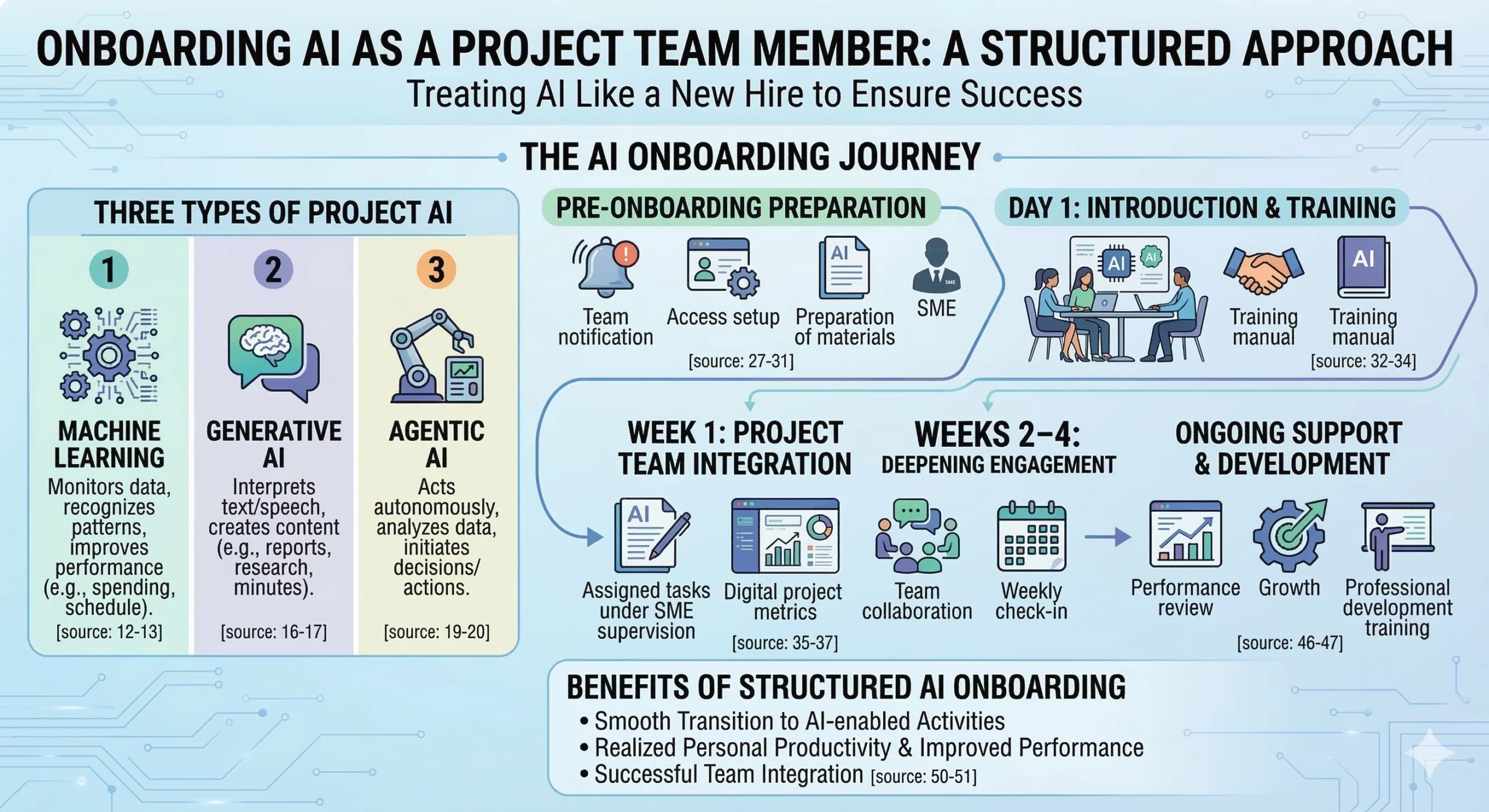
There are three types of AI commonly used with projects and each type is well-suited for some project activities.
- Machine Learning: AI monitors and analyzes data streams to recognize patterns and continually improve performance without explicit command and control programming. Project activities that could benefit from this type of AI are monitoring tasks such as monitoring project spending, schedule adherence, or test performance. This can also be used to monitor system performance or uptime. This AI can provide warnings about project risk and can make suggestions for project optimization.
- Generative AI: AI that can understand text or speech, interpret the meaning, and develop appropriate responses. The typical example is a chatbot. With respect to project activities, this type of AI can take minutes at meetings, prepare reports, analyze documents for key components, prepare presentations, create graphics, write code, and conduct in-depth research on any topic that is addressed in its data sources. The AI tool can be an integral part of any virtual conversation, answering questions and providing real-time data analysis.
- Agentic: AI that acts autonomously by analyzing data steams, making decisions based on that analysis, and initiating actions based on those decisions. This type of AI takes control of the equipment or process for which it has responsibility. It requires a set of operating rules and clear constraint boundaries. The AI learns based on the results of its earlier decisions and can improve its performance over time. It can schedule and set up meetings and events, consolidate inputs from team members to create reports and presentations, and deliver situation-dependent training to team members.
Your team may choose to only adopt one type of AI or adopt multiple AI applications that are doing all these and more. Regardless of the AI application selected, the use of an onboarding process will prepare your project team to get the most benefit from AI. This suggested approach follows the typical onboarding process that would be used with a new person joining the project team.
Pre-Onboarding Preparation
- Notify the Team: Inform existing team members about the new AI team member’s start date and role(s).
- Set Up Access: Ensure the AI applications have access to all appropriate files, datasets, and business applications.
- Prepare Onboarding Materials: Prepare training programs for project team members on the use of the AI capabilities.
- Assign an SME for Each AI Application: Designate a team member to become the project team’s expert on each AI application being adopted.
Day 1: Introduction and Training
- Project Introduction: Explain and demonstrate to project team how the AI applications will be used on project activities and how this supports project objectives.
- Training: Provide training on use of AI applications and demonstrate its relevance to the project.
Week 1: Project Team Integration
- Review Integration: Review the use of the AI applications on project activities and identify gaps or weaknesses.
- Integrate into Team Meetings: Use AI to schedule and facilitate team meetings (agenda, action items, minutes) and integrate AI dashboards and reports into project team updates. Incorporate the use of AI as a team member in problem solving and issue resolution meetings.
- Set Initial Goals: Collaborate with the project team to define short-term goals and expectations for the first month.
Weeks 2–4: Deepening Engagement
- Assign Tasks: Use AI to perform assigned tasks under the supervision of the project team SME.
- Schedule Check-Ins: Hold weekly team meetings to address questions and provide feedback.
- Encourage Feedback: Invite the project team members to discuss the pros and cons of working with the AI applications and suggestions for improvement.
- Expand Responsibilities: Gradually increase the complexity and scope of task and activities assigned to AI applications.
Ongoing Support and Development
- Performance Reviews: Conduct a formal review after the first month with each project team SME to discuss progress and set future goals.
- Professional Development: Offer opportunities for training and growth in the use of AI to project team members.
- Foster Adoption: Encourage project team members to rely on AI (within the boundaries of performance) to enhance their creativity and productivity on the project.
Conclusion
A thoughtful onboarding plan ensures a smooth transition into AI enabled project activities and adoption by project team members. This will help the team realize personal productivity and improved project performance. Regular communication, clear expectations, and ongoing support are key to successful integration and real-world business benefits.
Tag/s:Artificial IntelligenceBusiness TransformationCreativityEmployee ExperienceOrganizational Change